A new Brandon’s Two Cent’s series
Plus, a surprise electoral winner in The Netherlands
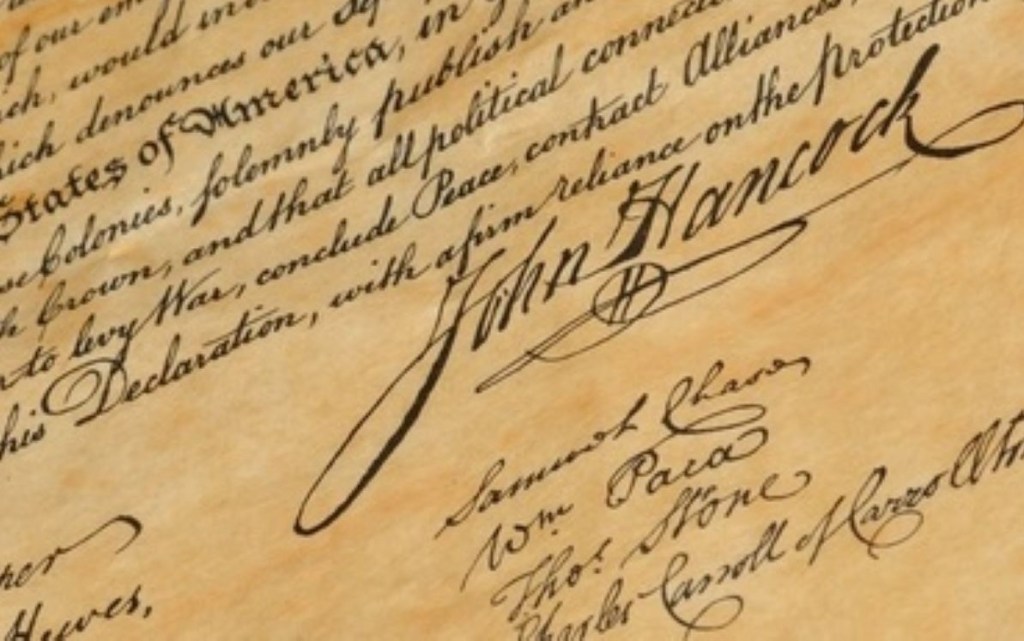
Three months ago, I was asked to sign something, and I thought “they want me to give my John Hancock1“. That got me thinking about something: While most Americans revere the Founding Fathers, they probably do not know much, if anything about most of them. What I mean is that most people probably know 5-6 of the Founders2: Washington, Jefferson, Adams, Madison, Franklin, and thanks to the smash hit Broadway musical, Alexander Hamilton3. But there were several dozen people who signed the Constitution and the Declaration of Independence. So I am starting a series that I will do once in a while that I’ll call “Not so Famous Founding Fathers”. I am going to start today with John Hancock.
When people think of John Hancock, they probably think of two things: His giant signature on the Declaration of Independence, and that there is an Insurance company bearing his name. But like many of the people who were involved in the Independence movement against the British, he was an educated gentleman. Born in 1737 in Braintree, his father, like his Grandfather before him, were ministers, and he was destined to follow in their footsteps. But when his father died, he lived with his Grandparents until it was determined that he would be better served living with his uncle Thomas, who was a wealthy merchant. John Hancock studied at Boston Latin school, went to Harvard for his college education, and when he graduated, worked at his uncle’s business. He quickly proved himself very capable and soon was sent to England to engage in important negotiations. When Thomas Hancock died in 1765, John Hancock inherited his fortune.
Hancock grew interested in politics, so he ran for a seat in the Boston Assembly in 1766. As the colonies began to rebel against the British, he embraced the cause and became a proponent for Independence. One of his ships was involved in a controversy against the British. In 1768, the British passed the Townshend Act which taxed items that were being shipped from England to the colonies. As the colonists began products in order to avoid paying the tax the British began to search ships carrying contraband goods. One of those ships was a boat owned by Hancock: The Liberty. While he was charged with smuggling contraband goods, the charges were dropped due to the lack of evidence of actual smuggling. The incident enhanced his standing amongst the colonists in Massachusetts and was a flashpoint in the resistance against the British.
He became very popular in Massachusetts, and when the first Continental Congress convened in 1774, he was selected to represent Massachusetts, along with John and Samuel Adams. He became President of the Continental Congress in 1775, where the major order of business was deciding who would lead the nascent Continental Army. Hancock viewed himself as the best candidate to lead the Army, so he was disappointed when George Washington was nominated, and ultimately chosen.
Hancock presided over the Continental Congress in 1776 when the Declaration of Independence was drafted and signed. As the President, he was the first to sign the document, which may explain why his signature was so big. According to legend, after he signed it, he exclaimed “It is big enough for England to see, let them double the reward (for capturing him)” Hancock stepped down as the Continental Congress President due to gout In 1777, and returned to Massachusetts. He was elected Governor of Massachusetts in 1780, where he served almost continuously until his death in 1793.
During the drafting and ratification process of the Constitution, John Hancock expressed wariness towards structure of it. As a governor, he feared the federal government encroaching on the governing powers of Massachusetts. During the ratifying convention in Massachusetts however, he spoke out in favor of it, helping win support for the Constitution amongst the delegates.
Hancock caused a political incident when George Washington visited Massachusetts during his tour of the states as President. Most Boston residents greeted Washington with fanfare as he arrived, but not John Hancock. He believed that as Governor, Washington should visit him. But he quickly realized his mistake, and visited Washington, claiming that the reason he didn’t visit Washington earlier was because he was ill. John Hancock died in 1793 and is buried at Granary Burying Ground in Boston
Elections in other countries: The Netherlands
On November 22, Dutch citizens went to the polls in a snap national election. The election was due to the fact that the government collapsed due to a disagreement between the coalition partners over stemming the tide of migration. The surprise winner of the election was the far-right Party for Freedom (PVV), led by Geert Wilders. Wilders is a veteran politician who founded PVV in 2006, and is known for his virulent rhetoric against Islam. He has called Islam a “Retarded Ideology” and was convicted of hate speech for a chant he led in 2014 calling for “Fewer Moroccans”. Wilders has called for Mosques to be shut down, and while he toned down his invective against Muslim’s in the lead-up to the election, he did not renounce any of his views.
He campaigned on dramatically reducing immigration and ending support for Ukraine. While PVV may have won the most seats, they did not by far win a majority, so they will have to work with other parties to build a coalition government. Due to the wariness of other parties to work with PVV, there is a good chance that any government that is formed will not be lead by Wilders, and many of the most extreme PVV policies will be scaled back. It is however a striking moment for politics in the Netherlands.
- An old expression ↩︎
- The first person of significance to use the phrase “Founding Fathers” was Warren G. Harding, someone whose legacy as President is poor. ↩︎
- Many people probably know about Patrick Henry, but only know that he said “give me liberty or give me death”. He is a fascinating Founding Father who I will write about in another post. ↩︎


 Grodence Paquado
Leave a comment