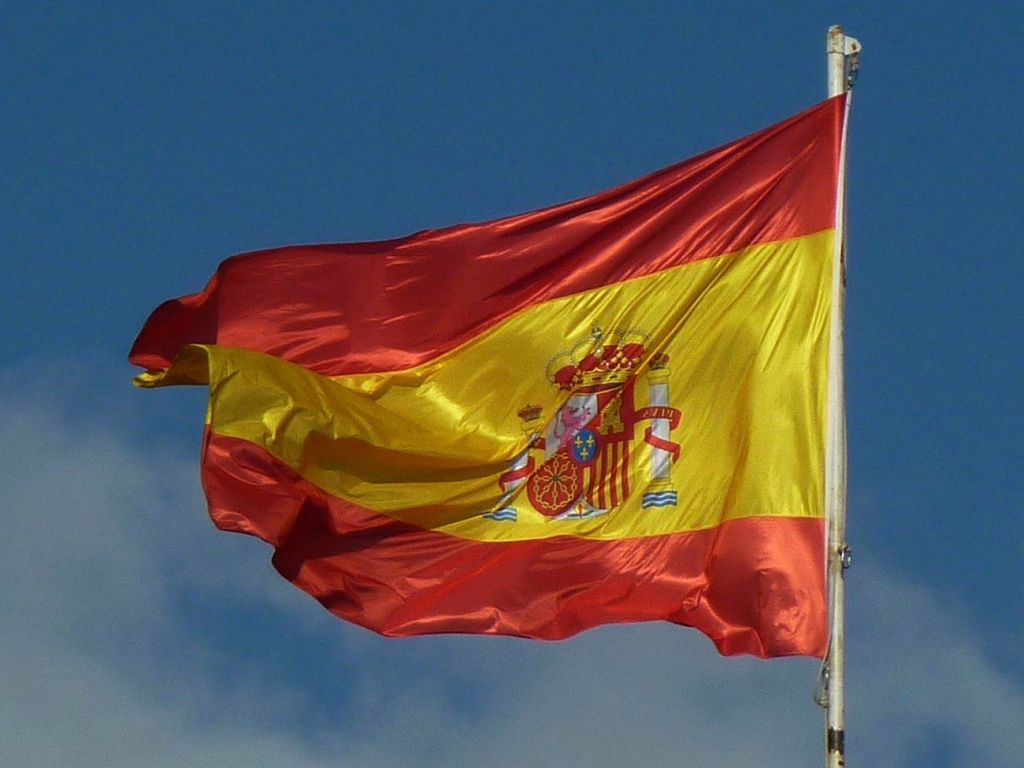
My next country in the series Elections in other countries is Spain.
Spain is a beautiful country known for its good weather, its pretty beaches, and its picturesque towns. It is the native country of world famous individuals such as golf star John Rahm, tennis star Rafael Nadal, and Pablo Picasso. Historical events that are taught in school textbooks have occurred in Spain, such as King Ferdinand and Queen Isabella financing Columbus’s voyages to America, and the Spanish Inquisition.
Spain is also a place where democracy has blossomed since the dictator Francisco Franco’s died in 1975. In the fist 35 years as a Democracy, there were two parties that were in charge, the center left Socialist Workers Party (PSOE) and the center right People’s Party (PP). In 2015 however, the political scene fragmented. Centrist party Citizens (Ciudadanos) and the far-left party Podemos secured a significant number of seats. There had to be repeat elections in early 2016 because neither PSOE or PP could form a government (PP formed a minority government after the second election).
When elections occured again in 2019, there was another deadlock and repeat elections. In this repeat election, Ciudadanos plummeted in support, and for the first time since Francisco Franco was in power, a far right party, Vox won a significant number of seats.
The current national elections are being held on July 23rd which is considered a snap election because it is scheduled a few months before the current term of government would have expired in December. PSOE Prime Minister Pedro Sanchez called it after his political party fared poorly in regional elections. There are four major parties that are competing, along with regional parties. They are:
1. Spanish Socialist Workers Party (PSOE)
A center-left political party which is the leading party in government, its leader, Pedro Sanchez came to power in 2018 by orchestrating the first ever successful no-confidence vote in modern Spanish history. The next year, after two elections he won victory in his own right, and has governed in a coalition with Podemos and more controversially, arranged for outside support from a separatist party.
During his tenure as Prime Minister, Sanchez has expanded abortion rights and enacted the first measure in Europe that gives paid leave to women suffering from debilitating menstrual cramps. He also pushed through a law which legally defined any non consensual sexual encounter as rape. There was a controversy with the law where a loophole inadvertently led to the early release or reduced sentences of hundreds of sexual offenders.
The government has raised the minimum wage, and has presided over an economy that has low inflation and steady GDP growth. However, unemployment has continued to be in double digits. Because of that and the fact that coalitions reliance on separatist parties, voters have soured on PSOE, and they are running 5 to 6 points behind the PP.
During the election campaign, PSOE has pledged to ramp up increase wind and solar production in order to combat climate change. It has also promised to give people a say on where wind and solar farms would be built, and would give them 10 percent of any profits the wind/solar farms make. In addition, it has campaigned on giving families up to 20 weeks of parental leave. Sanchez has also emphasized a possible PP-VOX coalition after the election, saying in effect that a vote for PP is a vote for Vox, which has helped the party raise its poll numbers and increase the possibility of it forming a coalition even if it doesn’t win the most seats.
2. People’s Party (PP)
The main center-right party, its leader is Albert Nunez Feijoo, a former governor of the Spanish region Galicia. Feijoo has been running as a calm technocrat who promises to be a steady hand at the wheel. He is in favor of strong cooperation with the EU, and is supports Ukraine. He has expressed wariness about a possible coalition deal with Vox after the election despite coalition deals between the two parties on the municipal level. As a result, he has responded to Sanchez’s attacks on the subject by slamming the Prime Minister’s cooperation with separatists.
The People’s Party is campaigning on a climate agenda that includes supporting Nuclear energy and levying a fee on businesses that produce renewable energy in order to cover the administrative costs. One senior PP official compared it to the fee people pay in order to renew their drivers license. The PP is also campaigning on lowering taxes for low income Spaniards and simplifying the tax code. In addition, the party pledges to repeal the wealth tax enacted by the current government, help people navigate the droughts and the extreme heat, and extending parental leave as well.
3. Vox
A far right party, its leader is Santiago Abascal, who left the PP in 2014 and cofounded Vox. It broke through in the elections of 2019, getting 10 percent of the vote in the first election, and 15 percent in the second election. Vox frequently rails against immigration from non-white countries, in line with other far-right parties in Europe. It has pledged to enact a naval blockade to prevent migrants from entering Spain. Like the Republicans in the U.S, it has campaigned against LGBT rights, particularly Trans rights, pledging to roll back a law passed by the current government that makes it easier for people to change their sex on government documents. Vox also wants to roll back abortion laws, and denies the existence of of climate change. Vox’s election program includes the repeal of laws aimed at combating domestic violence, saying it discriminates against men, and banning separatist parties.
4. Unite (Sumar)
Led by Yolanda Diaz, it is a coalition including Podemos and 15 other left wing parties that was put together to increase the chances of PSOE and the current governing parties winning another term. It is currently battling Vox for third place in the polls. Diaz is the Labor minister in the current government and is the most popular party leader running in the election. Sumar’s election program includes instituting more taxes on the wealthy and providing a 22,000 euro stipend to citizens turning 18 to help them get started in adulthood. The party is also campaigning on instituting a four day work week
As I wrote above, the current government depends on the outside support of a separatist party. They are:
1. Basque County Unite (EH Bildu).
It is a far-left party that advocates independence for the Basque region, it is the more radical of the two parties that dominate the Basque region, along with the Basque National Party. EH Bildu has seen its popularity rise, and won the most council seats in local elections this past May. In addition to independence, EH Bildu is campaigning on capping high rents, pushing for affordable health care, and equity for women. The party is controversial because the its leader, Arnaldo Otegi is a former member of ETA, a terrorist group which carried out attacks in the name of independence before renouncing violence and disbanding in 2018. There also were former ETA terrorists who were on election lists in the May local elections, which caused a stir. PP and Vox have attacked Prime Minister Sanchez for relying on the party for support.
That is all. I hope this is a useful guide for following the upcoming elections, and that everyone will follow the results.
Correction: Another separatist party, the Republican Left of Catalonia (ERC), which advocates for independence for the Catalonia region in northeastern Spain, also provided support to the PSOE led coalition government.


 Grodence Paquado
Leave a reply to Sue Groody Cancel reply